

Thermal Drone Roof Inspection Services
Thermal Drone Roof Inpections: Radiometric, Accurate, and Safe
Brian M. Stoneman
President, Recon AerialThermal Drone Roof Inspection Services that Deliver Clarity, Speed, and Savings
When it comes to identifying hidden roof issues, guesswork isn’t good enough. Our Thermal Drone Roof Inspection Services give you the data you need—fast, precise, and cost-effective. We deliver high-resolution thermal imagery and actionable insights without climbing a ladder or disrupting operations. Whether you manage commercial real estate, industrial facilities, or government infrastructure, we’ve got your rooftops covered.
Top industries using thermal drone roof inspections:
Commercial Real Estate – Prevent costly tenant issues and protect assets.
Manufacturing & Warehousing – Spot energy losses and avoid downtime.
Municipal & Institutional Buildings – Stay compliant and extend roof lifespan.
Common pain points we solve:
Rising energy costs from undetected heat loss → We pinpoint insulation failures and leaks fast.
Uncertainty in roof condition → We give you detailed, high-res thermal reports.
Expensive manual inspections → We save you time, money, and eliminate safety risks.
Why choose us?
Proven ROI: Studies show thermal drone inspections can reduce maintenance costs by up to 40%.
Rapid turnaround: Inspections and reporting completed in as little as 24–48 hours.
Expert analysis: Certified pilots, thermal analysts, and industry-standard reporting included.
Let’s bring your roof issues to light—literally. Contact us now for fast, affordable, professional Thermal Drone Roof Inspection Services.
10
+10
+
Thermal drone roof inspections quickly identify hidden moisture, heat loss, and structural issues—safely, efficiently, and without disruption—saving time, reducing costs, and supporting proactive maintenance decisions.
Brian Stoneman | President | Recon Aerial
What Is a Thermal Drone Roof Inspection?
Differential Heating the Key to Thermal Inspections
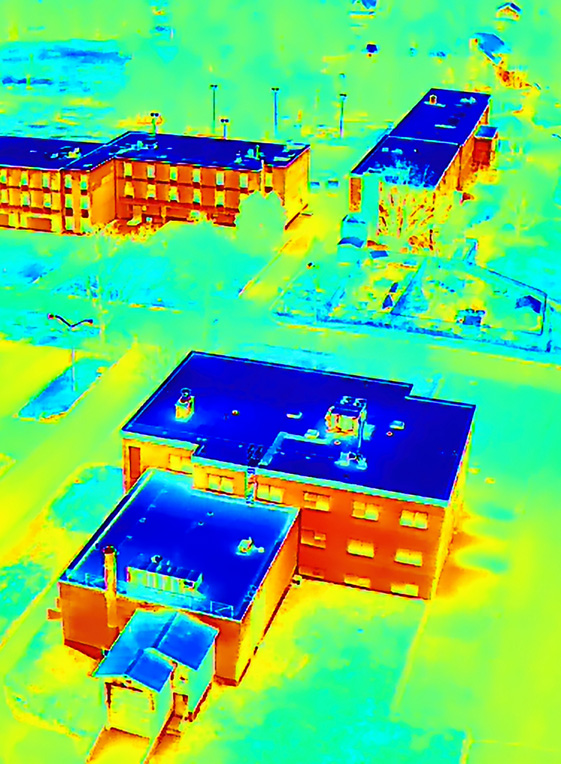
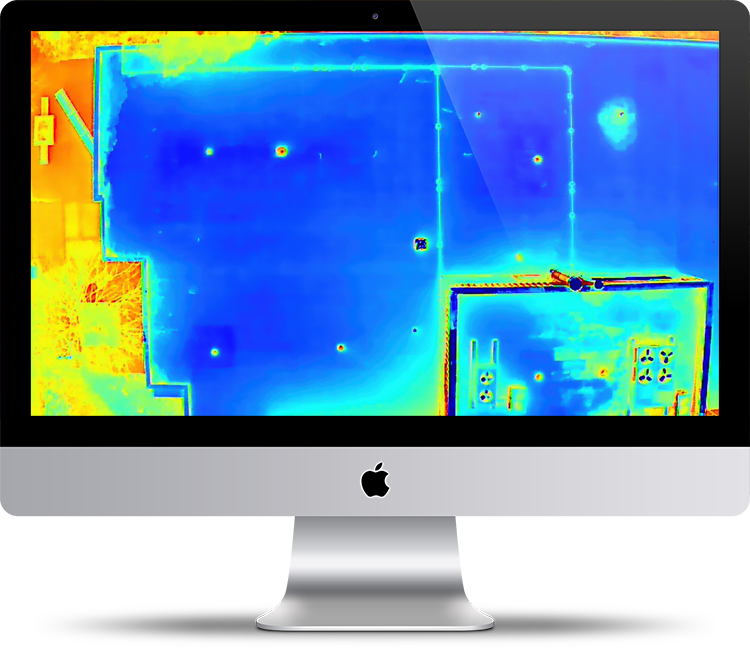
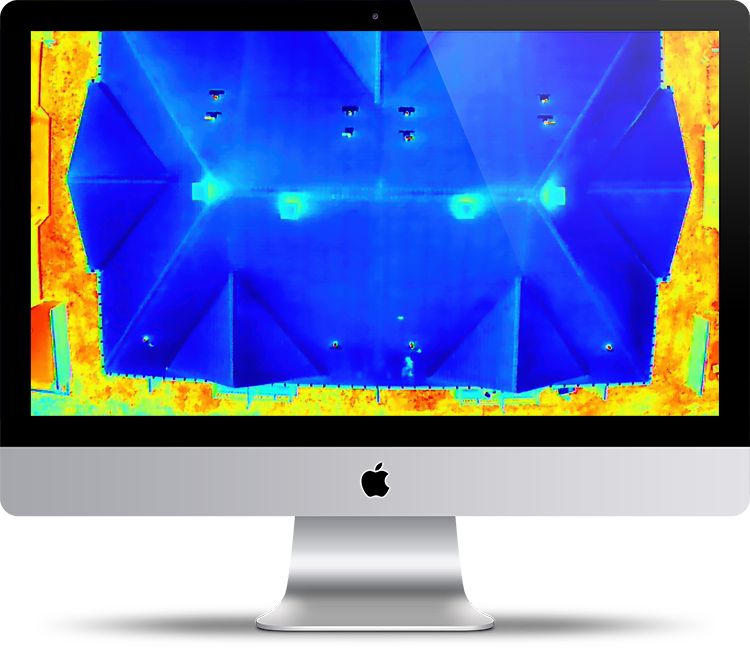
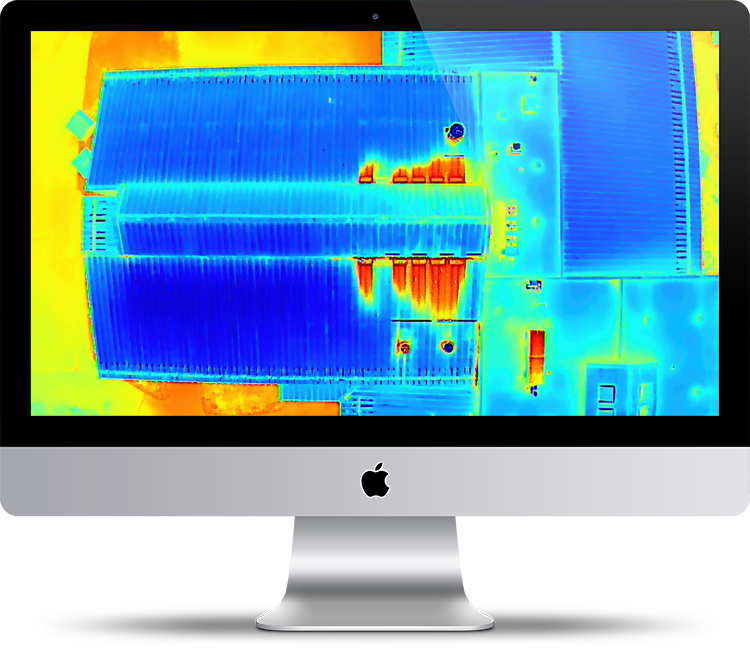
A thermal drone roof inspection service uses a radiometric thermal camera to inspect a roof system. A thermal or infrared camera can detect relative differences in how a roof system or roofing material emits heat.
In warmer seasons, a compromised section of a roof may become saturated with water. Since water absorbs and emits heat more slowly than the surrounding roof surface, a wet area will cool more slowly during the evening. This difference in relative cooling allows us to identify hotspots and areas potentially saturated with water.
In cooler seasons, when there is a large temperature difference between the interior and exterior of a building (ASTM1153, 9.3), thermal drone roof inspection services can still detect anomalies without the presence of water. Compromised roof structures may show greater relative heat loss compared to surrounding roof areas.
Overall, thermal drone roof inspection services rely on detecting relative differences in heat loss across roofing systems and materials to identify potential issues accurately and efficiently.
Brian M. Stoneman
President, Recon Aerial
Thermal drone roof inspections quickly identify hidden moisture, heat loss, and structural issues—safely, efficiently, and without disruption—saving time, reducing costs, and supporting proactive maintenance decisions.
Brian Stoneman | President | Recon Aerial
Thermal drone roof inspections quickly identify hidden moisture, heat loss, and structural issues—safely, efficiently, and without disruption—saving time, reducing costs, and supporting proactive maintenance decisions.
Brian Stoneman | President | Recon Aerial
Why Use Thermal Drone Roof Inspection Services?
The Benefits of Thermal Drone Roof Inpection Services
Using thermal imaging to conduct roof inspections is nothing new. In 1990, the ASTM published C1153, Standard Practice for Locating Wet Insulation Using Infrared Imaging, which remains in use today with minimal changes.
We use thermal drone roof inspection services for several key reasons, helping clients address critical pain points and realize substantial benefits:
Pain Points Solved:
Hidden roof leaks and moisture damage often go undetected until costly repairs are needed
Manual inspections are time-consuming, expensive, and pose safety risks
Verifying roofing work quality and contract compliance is difficult without clear documentation
Energy loss through inefficient roofing systems is hard to pinpoint
Key Benefits:
Early detection of leaks and insulation failures prevents expensive damage
Fast, non-intrusive inspections reduce downtime and operational disruption
Aerial thermography provides comprehensive data for verifying roof system installations
Enhances worker safety by eliminating rooftop access
Enables targeted energy efficiency improvements, lowering operational costs and emissions
Thermal drone roof inspection services offer speed, efficiency, and accurate insights—supporting smarter maintenance decisions and long-term cost savings.
Brian M. Stoneman
President, Recon Aerial How does Recon Aerial Conduct a Thermal Drone Roof Inspection for Leaks?
Proven Process for Infrared Drone Roof Inspections
First and foremost, Recon Aerial conducts all aerial drone flight operations in full compliance with RPAS regulations and according to our internal procedures for safe, efficient drone operations.
With certain limitations, Recon Aerial provides qualitative thermal drone roof inspection services in accordance with best practices outlined in the aerial requirements of ASTM C1153.
We follow a structured and proven process to ensure reliable results:
-
Step 1: Daytime Visual Inspection
We begin by capturing both RGB and thermal images to establish a baseline condition of the roof. -
Step 2: Follow-Up Thermal Inspection
In line with ASTM C1153, 11.2.4., a thermal drone roof inspection is conducted within two days under optimal thermal conditions, noting ambient temp, humidity, wind and other factors. -
Step 3: Data Compilation & Analysis
All captured imagery is compiled, reviewed, and analyzed to identify potential anomalies such as moisture intrusion, insulation failure, or heat loss. -
Step 4: Reporting
A comprehensive report is delivered within 14 days—often sooner—highlighting significant findings and areas that may require further investigation. -
Step 5: Engineering Review (Optional)
We offer expert review by our qualified engineering team and can recommend further support if in-depth analysis is required.
Clients receive both raw data and formal reports, ensuring transparency and actionable insights. Our thermal drone roof inspection services are designed to be thorough, compliant, and tailored to support proactive building maintenance.
Brian M. Stoneman
President, Recon Aerial
Thermal drone roof inspections quickly identify hidden moisture, heat loss, and structural issues—safely, efficiently, and without disruption—saving time, reducing costs, and supporting proactive maintenance decisions.
Brian Stoneman | President | Recon Aerial
Thermal drone roof inspections quickly identify hidden moisture, heat loss, and structural issues—safely, efficiently, and without disruption—saving time, reducing costs, and supporting proactive maintenance decisions.
Brian Stoneman | President | Recon Aerial
What We Inspect
What We Inspect on Every Roof
Thermal imaging finds what's hidden. High-resolution visual capture documents everything else.
A thermal scan tells you where moisture is trapped and where insulation has failed. But a complete roof assessment needs both — thermal and visual. Every inspection we fly captures high-resolution RGB imagery alongside the thermal data, so you get the full condition of the roof system in a single visit.
We document all key components:
- Membrane and shingle condition
- Drains, scuppers, and drainage paths
- Metal flashing, counter-flashing, and terminations
- Eaves, soffits, fascia, and downspouts
- Vents, curbs, and skylight perimeters
- Parapets and roof-to-wall junctions
That coverage matters because moisture rarely starts where it shows up. A failed termination
bar on the north parapet can saturate insulation forty feet away. Thermal shows you the wet area; the visual record shows you what let the water in.
One flight. One report. Both answers.
Brian M. Stoneman
President, Recon Aerial Defect Detection
Common Commercial Roof Defects We Identify
Flat and low-slope roofs fail in predictable ways. We know where to look.
Commercial roofs don’t usually fail all at once. They fail slowly, in specific places, for reasons that repeat across thousands of buildings. After years of rooftop inspections across Canada, we know the pattern — and we know which defects turn into leaks and which ones can wait.
What we routinely identify:
- Wind uplift and tented flashing
- Blow-off, billowing, and membrane displacement
- Ponding water and inadequate drainage
- Shrinkage, surface cracking, and crazing
- Punctures from foot traffic and mechanical work
- Blistering, ridging, and seam splitting
- Failed terminations and open laps
- Saturated insulation beneath intact membrane
That last one is the reason thermal matters. A roof can look sound from above and still hold thousands of litres of trapped water in the insulation below. Visual inspection misses it
entirely. Thermal imaging finds it — and finding it early is the difference between a targeted repair and a full tear-off.
We flag what needs attention now, what needs monitoring, and what’s fine. You get a prioritised picture, not a list of everything we saw.
Brian M. Stoneman
President, Recon Aerial
Thermal drone roof inspections quickly identify hidden moisture, heat loss, and structural issues—safely, efficiently, and without disruption—saving time, reducing costs, and supporting proactive maintenance decisions.
Brian Stoneman | President | Recon Aerial
Thermal drone roof inspections quickly identify hidden moisture, heat loss, and structural issues—safely, efficiently, and without disruption—saving time, reducing costs, and supporting proactive maintenance decisions.
Brian Stoneman | President | Recon Aerial
Insurance & Risk
Documentation That Holds Up on a Claim
The cheapest inspection you'll ever buy is the one you did before the storm.
When a roof fails after severe weather, the argument with your insurer is rarely about whether there’s damage. It’s about whether the damage was caused by the event — or by a condition that
was already there.
Without documentation, that argument is difficult to win. A high-resolution thermal and visual record of your roof’s condition, dated and on file, changes the conversation entirely. You’re
no longer describing what the roof used to look like. You’re showing them.
This matters more than it used to. Insurance adjusters increasingly use drone imagery themselves when assessing claims, because it’s faster and more precise than sending someone up a ladder.
Arriving with your own dated inspection puts you on equal footing rather than waiting on theirs.
The same record works for:
- Pre-purchase and pre-lease due diligence
- Warranty claims against a roofing contractor
- Capital planning and reserve fund studies
- Documenting condition at the start or end of a tenancy
An inspection costs a fraction of a disputed claim. Most clients schedule one before the season
turns — ahead of winter in the north, ahead of storm season elsewhere.
Brian M. Stoneman
President, Recon Aerial Deliverables
What You Receive
Not a folder of images. A report you can act on, budget from, and hand to a contractor.
Plenty of operators will fly your roof and send you a link to a photo gallery. That leaves the hard part — working out what it means — with you.
Every inspection includes:
- Radiometric thermal imagery with temperature data, not just colour maps
- High-resolution visual capture of the full roof system
- Annotated findings marking each defect and its location
- Roof Reports with measurements, calculated roof areas, and pitch data
- A prioritised summary separating urgent repairs from routine monitoring
The Roof Report is the part most clients end up using the most. Accurate areas and measurements mean your roofing contractor can quote from real numbers instead of a site visit and an estimate. It also means you can budget before you commit.
Where the findings warrant it, we can arrange a structural engineering review — a licensed engineer assessing the data and providing a formal opinion. Useful when you’re dealing with an insurer, a landlord, a board, or a capital planning decision that needs more than photographs
behind it.
Everything is delivered digitally, usually within days of the flight.
Brian M. Stoneman
President, Recon Aerial
Thermal drone roof inspections quickly identify hidden moisture, heat loss, and structural issues—safely, efficiently, and without disruption—saving time, reducing costs, and supporting proactive maintenance decisions.
Brian Stoneman | President | Recon Aerial
Infrared Drone Roof Inspection
Getting Results!
Getting Results!
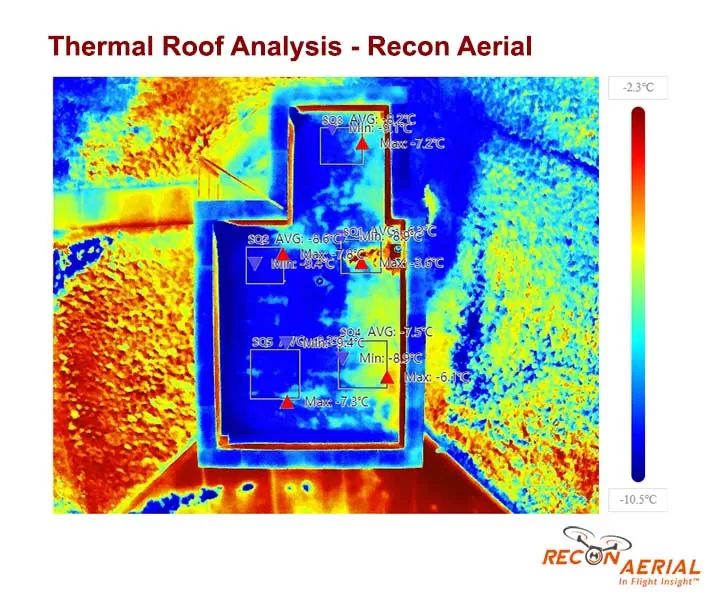
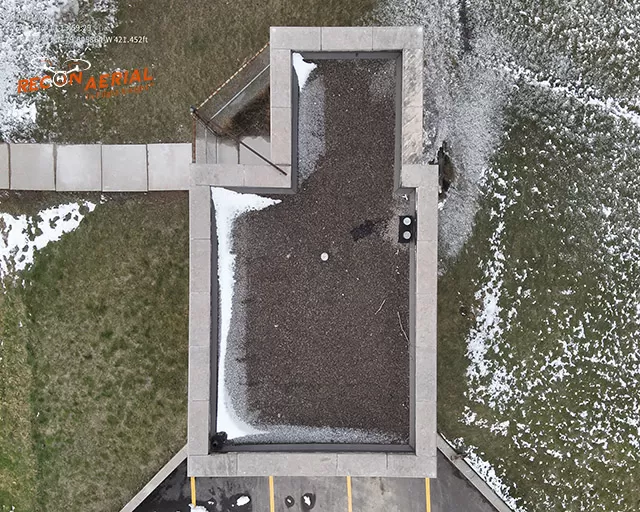
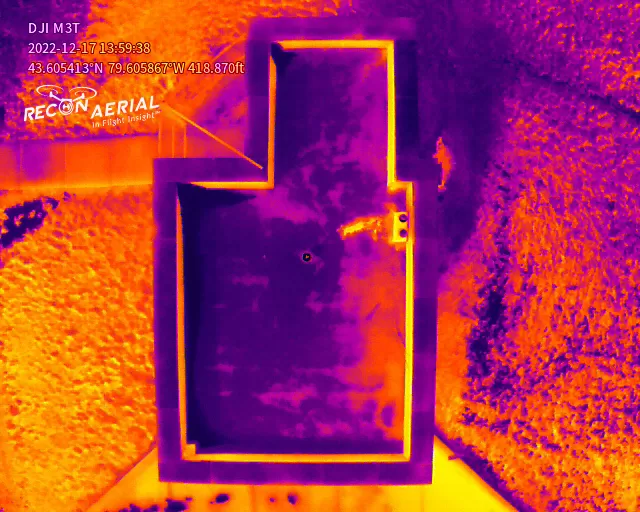
In the example below, thermal images captured by drone during winter revealed a compromised roof area where the pea stone covering had been disturbed. While the RGB image shows a dark patch, the thermal data indicates this spot is emitting significantly more heat—averaging 3.5°C higher than adjacent areas—suggesting poor insulation or potential water ingress.
Left unaddressed, this issue could lead to water damage and ongoing energy loss, driving up operational costs.
This example highlights how thermal drone roof inspection services deliver clear value to property owners and managers by identifying hidden issues early, reducing maintenance costs, saving energy, and extending roof lifespan.
Drone Inspection Services
We pride ourselves on our ability to capture just about any drone shot. We have a lot of experience working with exceptional clients like you. Checkout some of the more common drone inspection service details for work we shoot regularly.
Principal Drone Services
- Up to 5.1 K drone video footage
- No Limit to Media (Photos or Video)
- Reshoot Free, if needed (but this is never needed)
- High resolution sensors
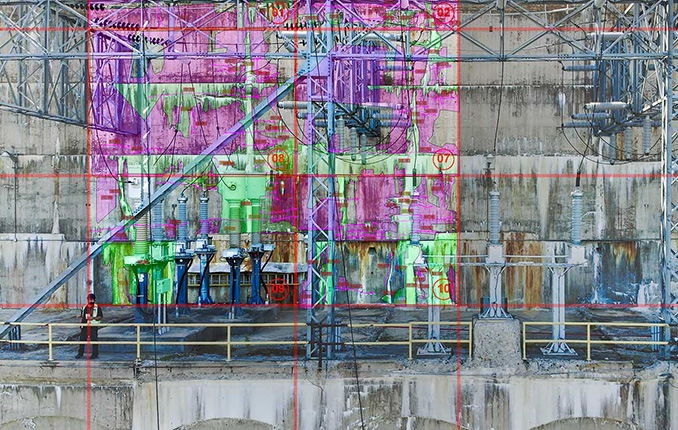
- Infrared inspection capability
- AI backed reporting
- Mapping specific sensors
- GNSS survey receivers
- Aerial to AutoCAD deliverables
- Site progress shots
- Live streaming 24/7 timelapse
- Mapping, earthworks and site logistics

We Get Around!
Years Strong
Happy Clients
Missions Flown